
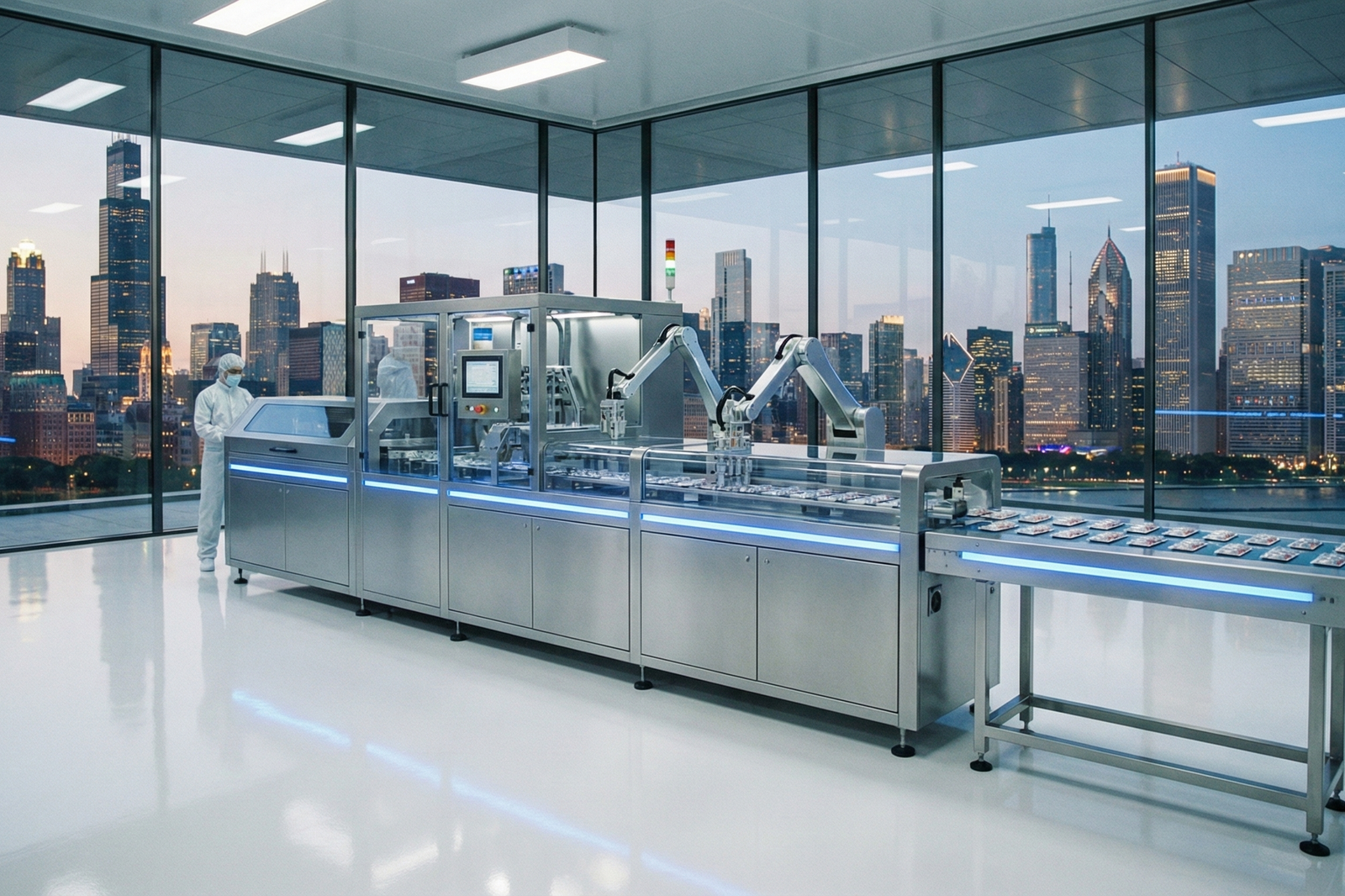
I often see manufacturers invest in good individual machines, but still struggle with low efficiency, long downtime, and daily coordination problems across the production line.
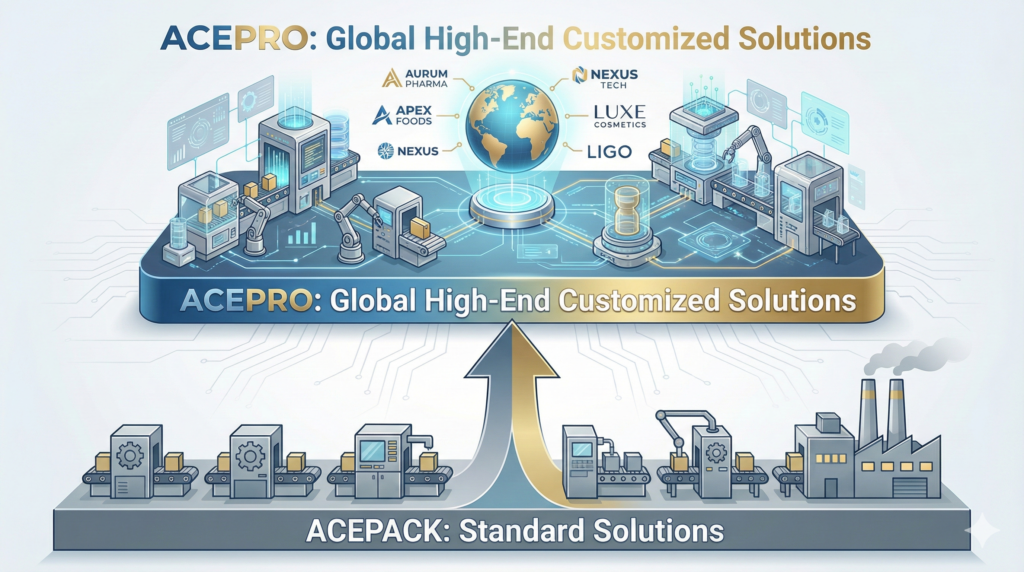
Turnkey packaging integration combines equipment, automation, and control into one unified system, and Acepro designs these solutions to improve efficiency, stability, and long-term operational performance.
I want to explain how this works in practice, because real efficiency does not come from one fast machine, but from how the entire line works together.
What does turnkey packaging integration mean for manufacturers?
I notice many manufacturers hear the word “turnkey” often, but its real value is not always clear.
Turnkey packaging integration means delivering a complete, ready-to-run packaging line where machines, automation, and controls are designed, installed, and optimized as one system.
From individual machines to one system
Traditional projects often involve multiple suppliers. Each supplier delivers one part.
Turnkey integration changes this model.
One partner takes responsibility for:
- Machine selection
- Line layout
- Automation logic
- System testing
This removes gaps between machines.
Single responsibility model
With turnkey solutions, accountability is clear.
If the line does not perform, there is no finger-pointing between suppliers.
I see this reduce stress for plant managers and engineers.
Faster project execution
Integrated projects move faster because:
- Interfaces are pre-defined
- Controls are standardized
- Testing happens before shipment
This shortens installation and ramp-up time.
Clear scope and expectations
Turnkey integration defines scope early.
This reduces unexpected changes during installation.
Here is a simple comparison:
| Project Aspect | Multi-Supplier Model | Turnkey Integration |
|---|---|---|
| Responsibility | Split | Single |
| Integration risk | High | Low |
| Startup time | Long | Short |
| Line stability | Variable | Predictable |
Built for performance, not assembly
I approach turnkey projects by designing performance first, not just connecting machines.
How does automation improve production line efficiency?
I often say automation does not replace people, it removes friction from daily work.
Automation improves production line efficiency by reducing manual intervention, stabilizing processes, and enabling consistent operation at higher speeds.
Reduction of manual handling
Manual steps introduce variation.
Automation reduces:
- Human error
- Inconsistent timing
- Fatigue-related mistakes
This improves both speed and quality.
Stable and repeatable processes
Automated systems repeat the same motion every cycle.
This stability improves:
- Filling accuracy
- Sealing quality
- Product appearance
Consistency is a major efficiency driver.
Faster response to changes
Automation systems adjust parameters quickly.
Speed, format, and product changes happen through software, not manual adjustment.
This reduces downtime.
Data-driven operation
Automated lines generate data.
This data helps teams:
- Track performance
- Identify losses
- Improve OEE
Here is how efficiency changes:
| Efficiency Factor | Manual Line | Automated Line |
|---|---|---|
| Speed stability | Low | High |
| Error rate | Higher | Lower |
| Changeover time | Long | Short |
| Data visibility | Limited | High |
Automation supports growth
As volume grows, automated lines scale better than manual processes.
Why is system integration critical in modern packaging lines?
I see many modern machines fail to deliver results because they are not integrated well.
System integration is critical because modern packaging lines rely on synchronized machines, shared data, and coordinated control to operate efficiently and reliably.

Interdependence of line components
In a modern line, no machine works alone.
Film feeding, filling, sealing, inspection, and packing must stay synchronized.
If one machine drifts, the whole line suffers.
Unified control architecture
Integrated systems use one control platform.
This allows:
- Centralized monitoring
- Coordinated motion control
- Unified alarms and diagnostics
This simplifies operation.
Reduced interface failures
Poor integration causes communication errors.
Turnkey integration defines interfaces clearly and tests them as a system.
This reduces unexpected stops.
Easier maintenance and troubleshooting
Integrated systems are easier to maintain.
Faults are easier to trace because logic is centralized.
Here is a comparison:
| Integration Level | Low Integration | High Integration |
|---|---|---|
| Line coordination | Weak | Strong |
| Fault diagnosis | Slow | Fast |
| Downtime risk | High | Lower |
| Operator workload | High | Lower |
Foundation for smart manufacturing
Integration is the base for smart factories.
Without it, advanced automation cannot work.
How do turnkey solutions reduce operational complexity?
I often hear operators say the line feels simpler after a turnkey project, even if it is more advanced.
Turnkey solutions reduce operational complexity by standardizing interfaces, simplifying control logic, and presenting operators with one coherent system instead of many separate machines.

Simplified operator interaction
Operators interact with one system interface.
They do not need to learn multiple control philosophies.
This reduces training time.
Standardized spare parts and logic
Turnkey systems often use standardized components.
This simplifies:
- Spare parts management
- Maintenance planning
- Technical training
Clear operating procedures
One supplier defines operating standards.
This creates consistent procedures across shifts and plants.
Reduced coordination effort
Fewer suppliers mean fewer meetings and fewer misunderstandings.
Teams focus on production, not coordination.
Here is how complexity changes:
| Operational Area | Non-Turnkey Line | Turnkey Line |
|---|---|---|
| Control systems | Multiple | Unified |
| Operator training | Complex | Simpler |
| Maintenance effort | High | Lower |
| Daily coordination | Difficult | Smooth |
Complexity moves from site to design
I prefer complexity in engineering, not on the factory floor.
That is the real value of turnkey solutions.
Conclusion
Acepro’s turnkey packaging solutions integrate automation and system design into one unified line, helping manufacturers reduce complexity, improve efficiency, and achieve stable, long-term production performance.